The 4 Coping Styles That Show Up When Life Changes Fast
Why We Clash in the Doctor’s Office
The 4 Ways People Process Health News Under Pressure
1. What’s Actually Going On in That Room
Two people can sit side by side and hear the exact same diagnosis.
One starts asking questions, taking notes, wanting all the detail.
The other just wants to know what happens next so they can get through it.
Neither response is wrong.
They are both coping.
When we hear difficult health news, the brain shifts into protection mode. It is not focused on learning. It is focused on safety.
That changes how we take in information.
Some people want more information to feel steady.
Some need less.
Some need to feel heard first.
Some need a clear plan.
If we do not understand this, we start judging each other.
That is where tension starts.
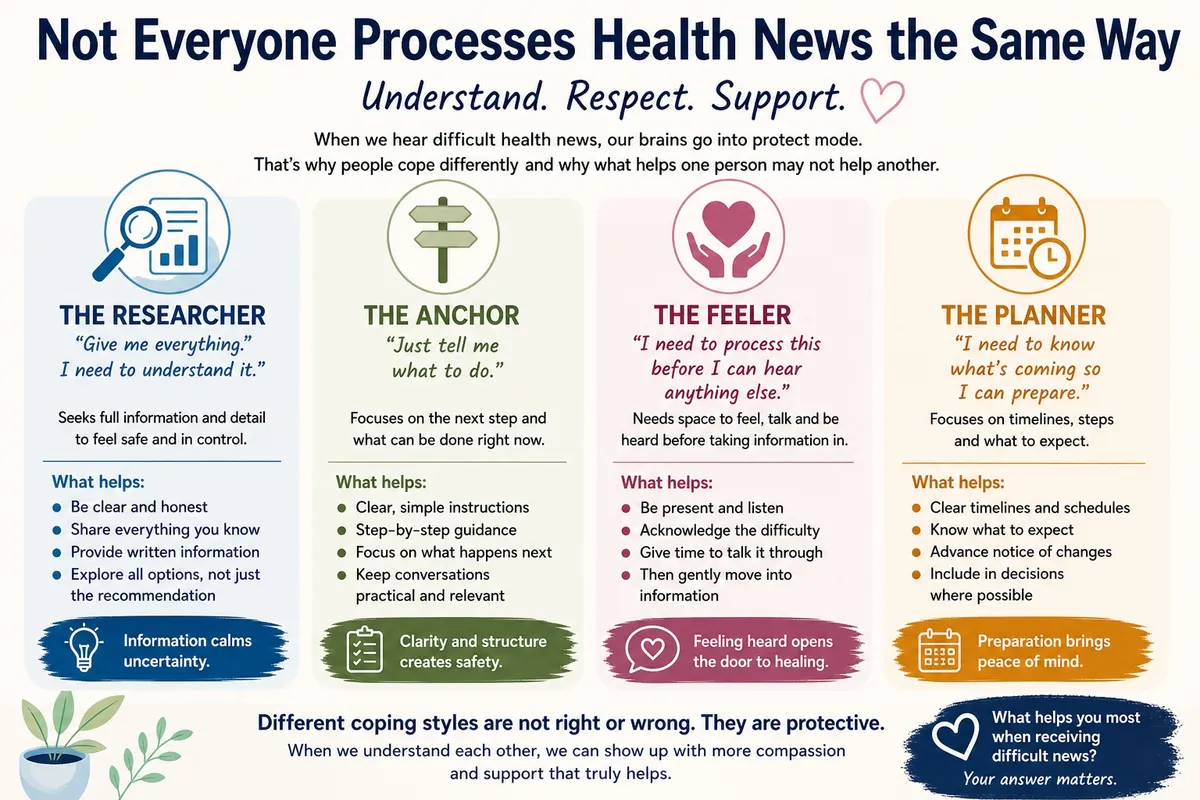
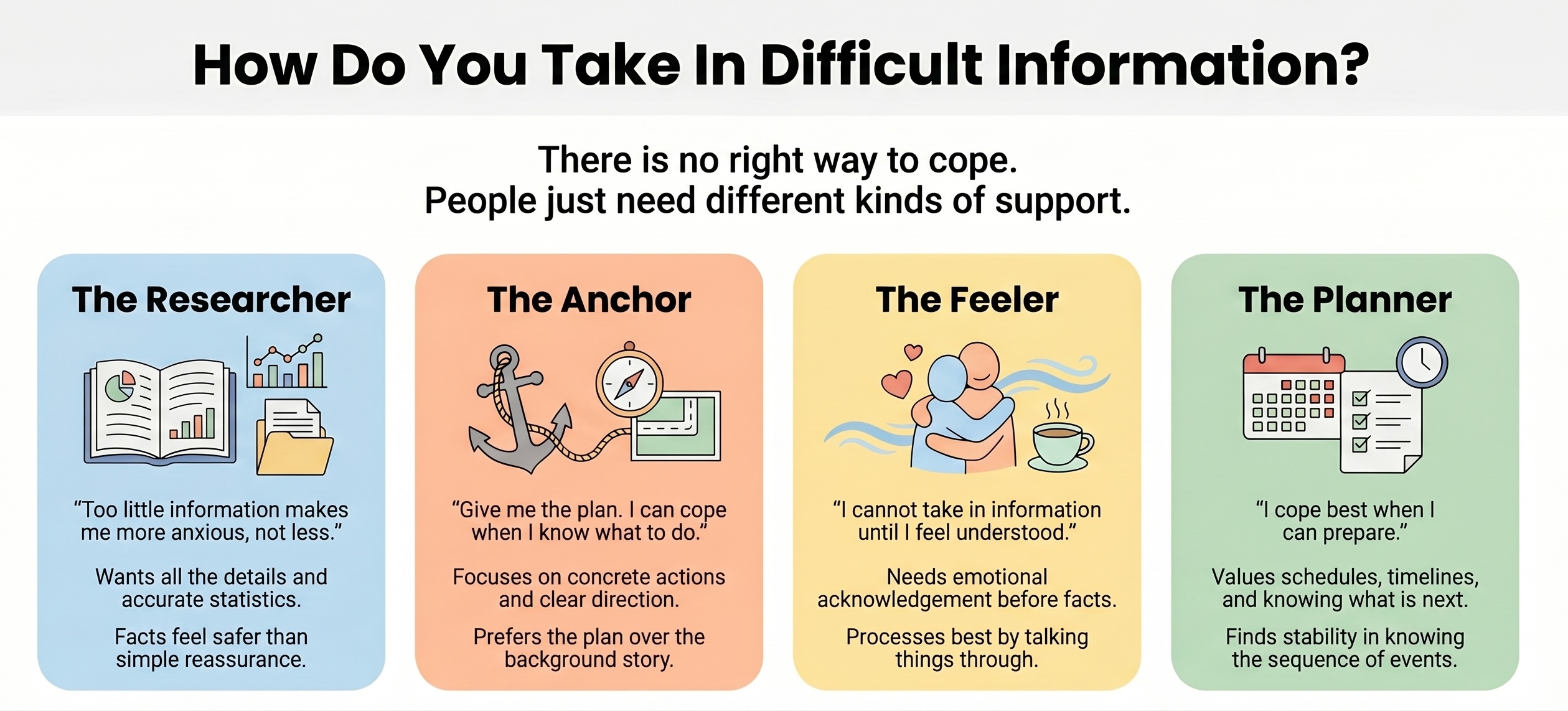
2. The Researcher
“Give me everything. I need to understand it.”
This is the person asking for data, studies, outcomes, and options.
From the outside, it can look like overthinking.
It is not.
Information is how they settle themselves.
What makes this harder is when people hold things back or try to soften the truth. That increases anxiety, not reduces it.
What helps:
Be clear and honest
Share what you know and what you don’t
Provide something they can read or revisit
Talk through all options, not just the recommendation
If this is you, there is nothing wrong with needing information.
That is how you stay grounded.
3. The Anchor
“Just tell me what to do.”
This person does not want the deep explanation.
They want the next step.
They are not in denial.
They are focusing on what they can control right now.
When things feel overwhelming, structure becomes safety.
What helps:
Clear, simple instructions
Step-by-step guidance
Focus on what happens next
Conversations that stay practical
If this is you, you are not avoiding anything.
You are prioritising what matters in the moment.
4. The Feeler
“I need to process this before I can hear anything else.”
This is the person who needs space to react and talk through what is happening.
If someone jumps straight to facts or solutions, it does not land.
Not because they are not listening.
Because their brain is still processing the emotional impact.
What helps:
Being heard first
Acknowledgment like “this is a lot”
Time to talk it through
Then moving into information
If this is you, you are not falling apart.
You are making space so you can process what comes next.
5. The Planner
“I need to know what’s coming so I can prepare.”
This person focuses on timelines, steps, and what to expect.
Planning creates a sense of control when things feel uncertain.
What throws this off is last-minute changes or unclear expectations.
What helps:
Clear timelines
Knowing what to expect at each stage
Advance notice of changes
Being included in decisions where possible
If this is you, you are not being controlling.
You are creating stability in a situation that feels unpredictable.
6. Why This Matters
Most tension does not come from people being difficult.
It comes from people coping differently.
A Feeler might see an Anchor as distant.
An Anchor might feel overwhelmed by a Feeler.
A Researcher might feel shut down.
A Planner might feel unsettled by changes.
When you understand this, things shift.
Instead of asking
“Why are they reacting like that?”
You start asking
“What do they need right now?”
7. What I Want You to Take From This
There is no right way to respond to difficult health news.
You are not doing it wrong.
Your brain is doing what it needs to do to get you through.
The real shift comes when you can recognise your style and say:
“This is what helps me.”
That makes it easier for others to support you properly.
Final Thought
What is the one thing you wish people understood about how you process hard news?
That answer matters.
And it is worth saying out loud.
This content is for reflection and conversation. It is not a diagnosis or a replacement for professional support. If you are struggling, speak with your care team or a qualified professional.